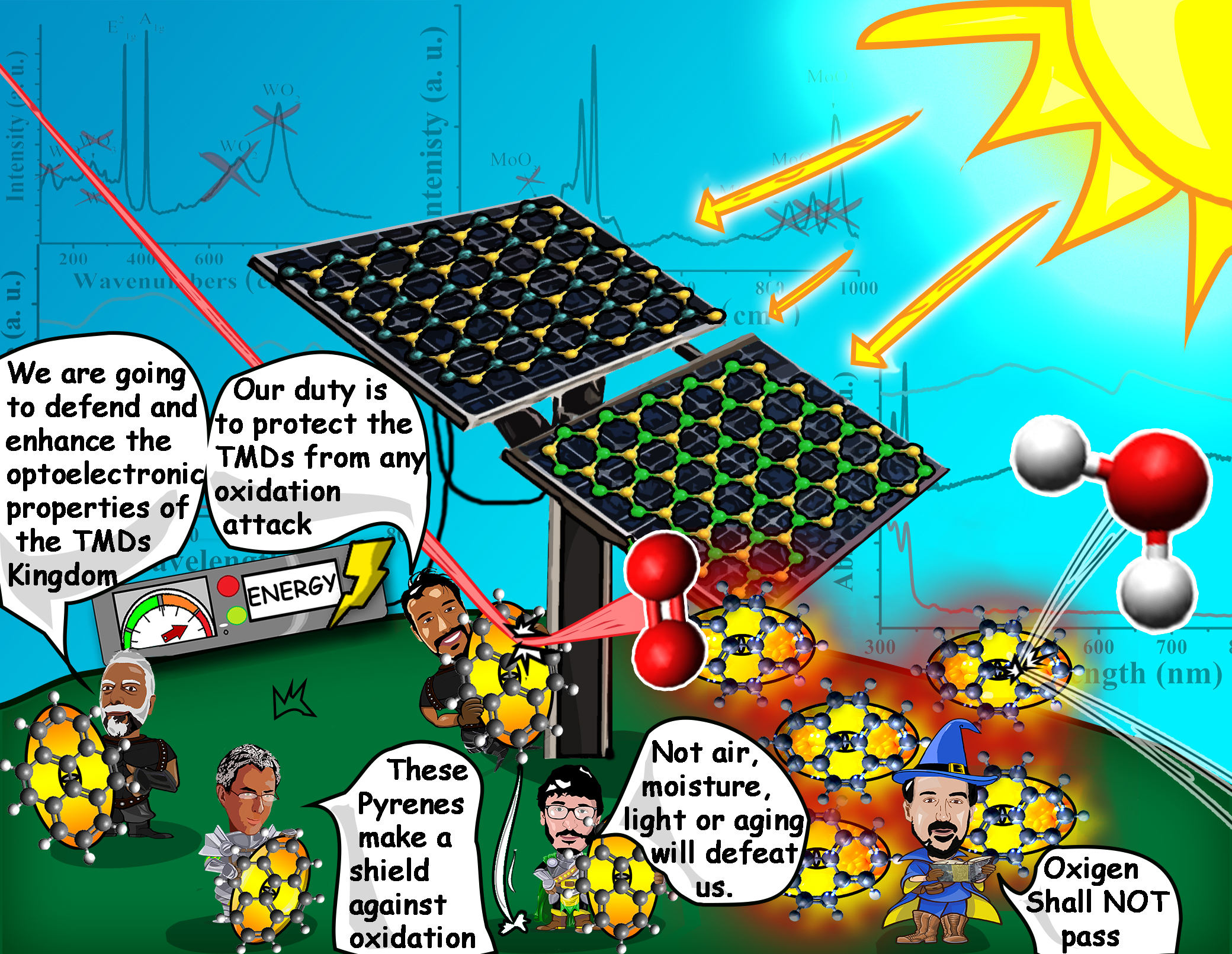
Yes, graphene is very stable, you need extremely aggressive chemicals, such as mixing piranha solution with nitric acid and chromate or raising the temperature of about 300 degrees Cº in order to destroy it.
But graphene is not alone. It has big brothers with amazing properties that, although it seems surprising, are more exotic. The TMDs!
Well, we can discuss whether TMDs really are 2D materials. They have a thickness of 3 atoms of thickness and a length of millimeters. Me, and the scientific world call them two-dimensional, if you don’t like it, you can start crying.
These materials are semiconductors. For the world of nano-things, technology or biology this is a revolution. – (I love this era, wherein revolutions are accompanied by the hand of science and not wars).
But they are not normal semiconductors, they get excited with visible light. Yes, some of these materials can change from semiconductors to metallic only with light. Who don’t want photo-transistors, photo-sensors and other photo-things? You may not, but the device you are using to read this article need it. So, that´s mean that you too.
But obviously, small things tend to be fragile, and tend to break easily … We know that Graphene is different, their stability and semi-metal properties are clear advantages. But It is not semiconducting.
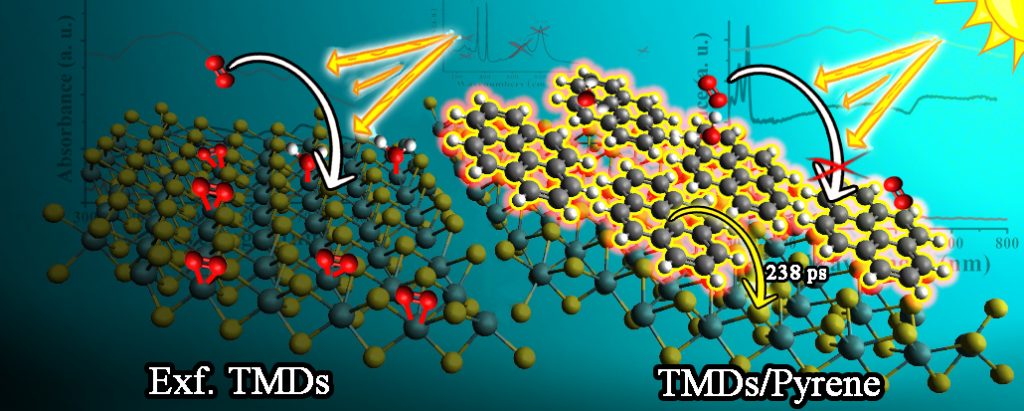
Chemically, bulk (3 dimension) TMDs are very stable, however, 2D materials… Well… Let’s say they oxidize easily. In fact, its lifetime is around 6 months, without practical applications. Obviously, normal citizens don’t like buying computer every half year …
Over the years they have tried to find solutions, and in fact, they have been achieved, but let’s say, they were expensive…
But, now we have found a simple method. Take a bath and dry! So what we see exactly? -Lifetime enhance by years!
Where is the trick? Obviously, science behind bath!
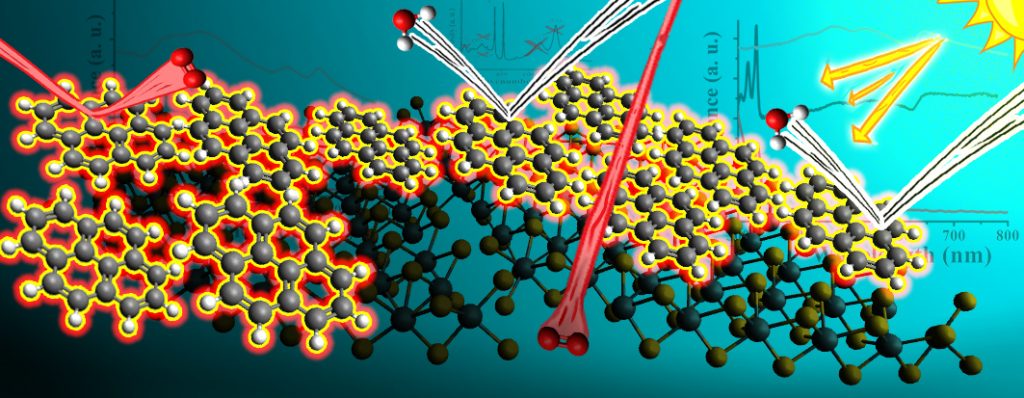
2D materials have widely flat areas and other flat structures such as organic molecules usually are stabilized through vaan der Waals on its surface. That is what the bath done!. Bath is rich in molecules of Pyrene (see the cards extracted from ChemiProject game), making a protective layer against environment chemicals such as O2 and H2O.
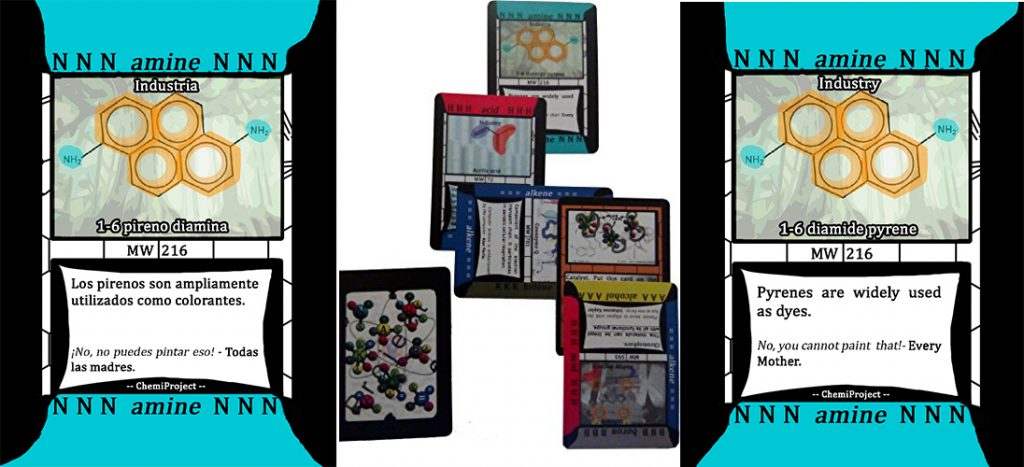
That is exactly what we have discovered in our latest work published in nanomaterials.
We have made these materials live for at least 2 years. Additionally, pyrene protects TMDs even in aggressive conditions, under high intensities of laser light.
Of course, do not wet your actual or newest devices. Obviously, the pyrene is apolar and the protective layer will not be removed with water. But I don’t want problems or complaints because someone has thrown themselves into the water with a computer. Computer has many components. Don’t bother me!
Greetings,
Dr. Rubén Cantón-Vitoria
| | |